
Every August, we eagerly await the Perseids Meteor Shower, one of the most spectacular celestial events of the year. The Perseids Meteor Shower 2026, peaking on 12–13 August, promises bright meteors, dazzling fireballs, and an unforgettable night under dark skies. At Stargazing Mumbai, we’re excited to help you experience this incredible natural phenomenon and create memories beneath one of the year’s most beautiful night skies.
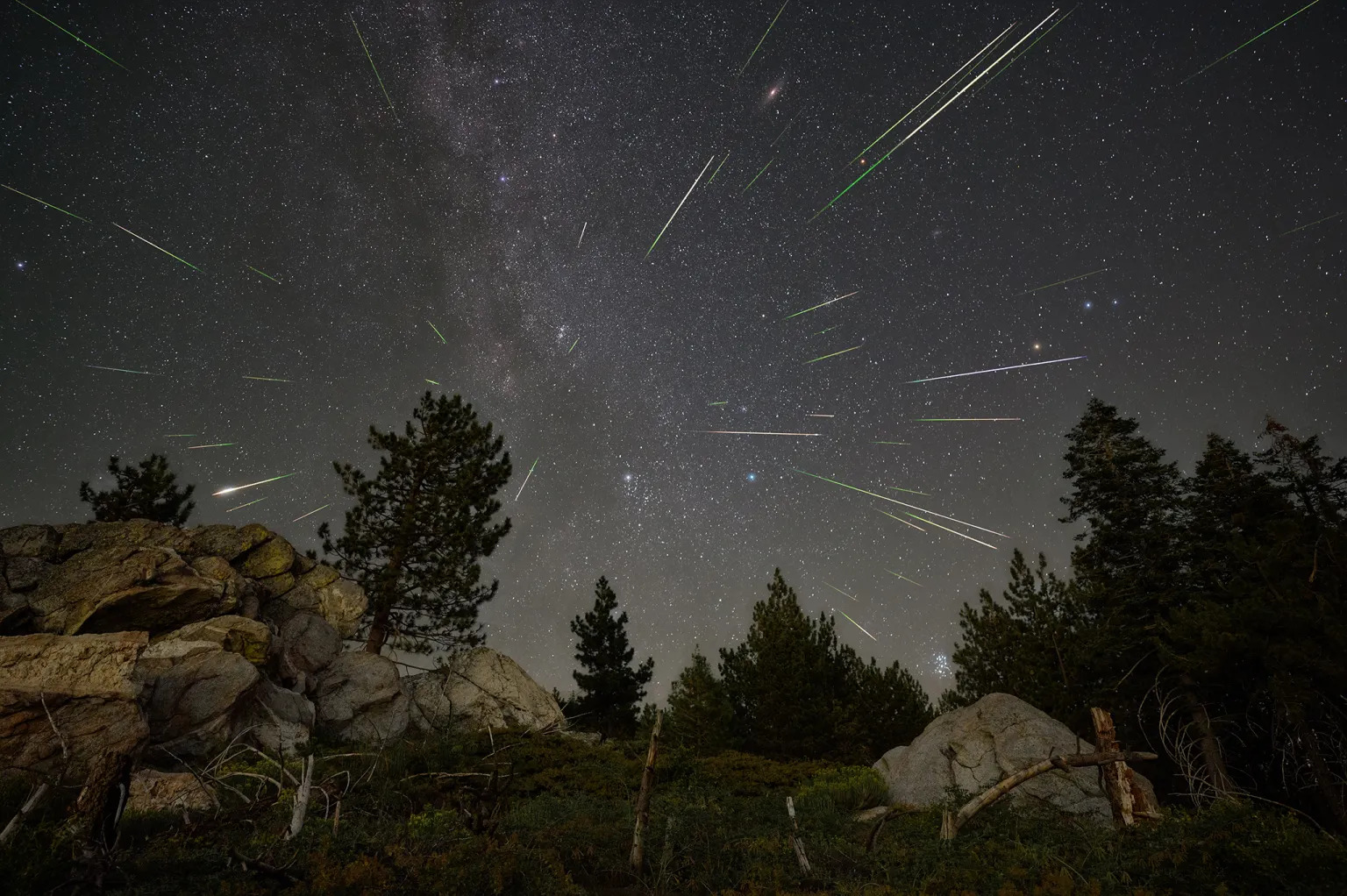
1. What is the Perseids Meteor Shower 2026?
Imagine a clear, dark night, standing at an elevation of hundreds or even thousands of meters above sea level. You could witness dozens, perhaps even hundreds, of bright streaks of light being shot across the sky every hour. While the Perseids Meteor Shower may look like a spectacular phenomenon, it is actually a unique event that is much anticipated every year.
Every August, stargazers, both amateur and professional, take time off from their normal day-to-day activities in order to enjoy this annual event. This exciting meteor shower is even visible without the expensive stargazing equipment, as the meteor streaks are bright enough to be seen with the naked eye.
To understand more about the Perseids shower, we must first understand what a Meteor Shower is. A meteor shower is an event that occurs when a trail of dust and debris that was once part of a comet or asteroid intersects the orbit of the Earth.
The small cosmic dust and debris are brightened by the intense heat of friction from the air as they enter the upper layers of the atmosphere. These then become streaks of light to the viewers on Earth.
2. A Cosmic Ancestor
2.1 Dust Cloud of a Comet
Most meteor showers originate from ancient, fragmented rocky asteroids. The Perseids originate from something a bit more sophisticated. It is all thanks to a massive, icy visitor: Comet 109P/Swift-Tuttle.
Discovered in 1862, this 26 km wide comet last passed the Earth in 1992, when it was too faint to be seen by the naked eye. The next time it passes by, the year will be 2126, when the comet might be visible to the naked eye.
When a comet travels close to the Sun, it starts to warm up and begins to disintegrate. Its center begins to throw jets of vaporous dust and other materials. After a comet travels along its path in space, it leaves behind a large cloud.
Coincidentally, the Earth travels through Comet 109P’s dust cloud.
2.2 A Long Journey
Comet 109P/Swift-Tuttle has an orbit that lasts 133 years. This comet makes a tour through the inner solar system and close to the sun every 133 years. Each time it does so, it releases more debris along the way.
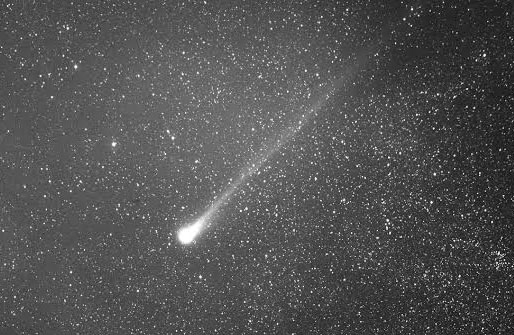 Trivia time! The debris from this comet creates a meteor shower which, interestingly enough, is named after the constellation Perseus. Why? Well, unfortunately, it’s a bit of a trick! The shower of shooting stars seems to come from the Perseus constellation, because, from Earth, all the stars that are shooting across the sky are shooting from the same point.
3. The Physics Behind a Shooting Star
Atmospheric Incineration
These tiny grains of space dust do not simply catch fire due to standard friction when entering the Earth’s atmosphere; the mechanism involved is far more violent
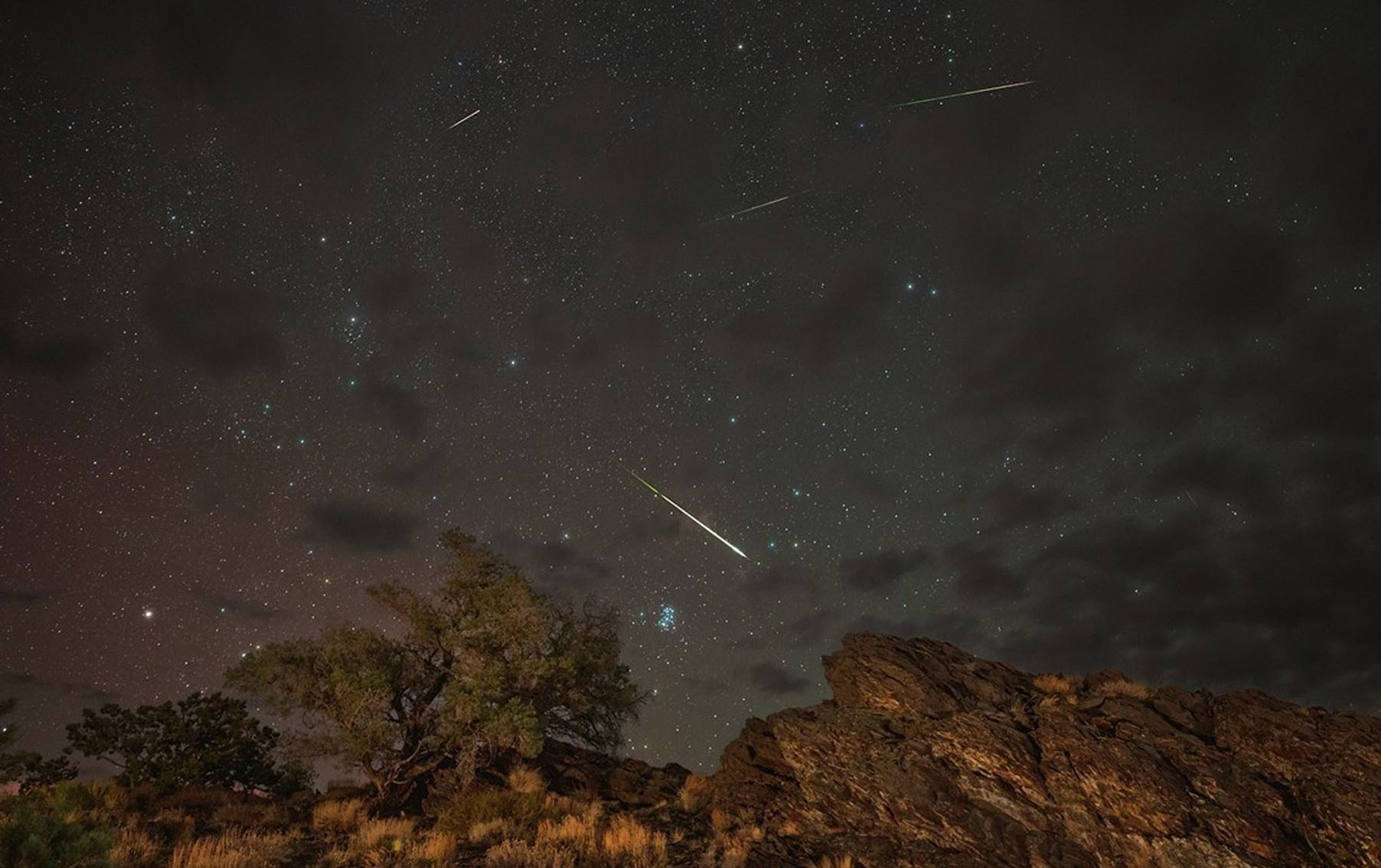 Speed: The particles we see burning in the atmospheric environment, like those from the comet of Swift-Tuttle, travel across the sky at 59 km/s, far greater than the speed most cars would hope to reach.
Pressure: As the particles of Swift-Tuttle begin to burn by contact with the upper atmosphere, they are displacing air, and friction is created. This friction also brings the air to staggering high temperatures of 1,600 °C. The dust that meets that friction of the upper atmosphere is not just heated, but actually turns into a stream of plasma.
Altitude: For the meteor shower known as the Perseids, the meteors tend to vanish at a height of 97 km from the Earth’s surface.
3.2 The Aftereffect
Perseids meteor shower 2026 has a unique ability to leave long, glowing trails behind. And those trails typically last long after the meteor’s bright flash is gone.
How it Works: The impacts of the comet’s particles that reach the atmosphere have high impact energy. Electrons get ripped out of surrounding air molecules, leaving behind a column of bright, ionized plasma.
Lingering Light: The electrons that were dislodged would eventually return towards their original form, and in doing so, emit light that creates the faint trail. The trail is eventually erased by high-altitude atmospheric winds.
The Knockouts: Because Comet Swift-Tuttle is massive – with many dust and rock particles of impressive size – Perseid meteors are brighter than planets and many meteors, including the fireball meteors that Perseids feature!
4. Viewing Strategies
4.1 Right Timing and No Moon
Two elements create the ideal meteor shower viewing experience: clouds and moonlight. In 2026, the odds are in our favor!
A Dark Delight: The peak of the Perseid meteor shower will be the night of August 12 to 13, 2026. A New Moon occurs on August 12, 2026, leaving the sky dark with no moon for us to enjoy the meteor shower.
Sky-High Rates: In the right conditions, you can easily spot up to around 100 meteors per hour!
Night Owl Hours: The meteor radiant will be visible in the Perseus constellation, but the best viewing period of all the meteors will be from midnight to dawn.
4.2. Navigating the Stars and Dark Adaptation
To make sure that you are able to see as many meteors as possible, you can use a few simple tricks.
Where to Look: The meteors will appear to stream from the meteor radiant of the constellation Perseus, which is located on the eastern half of the sky.
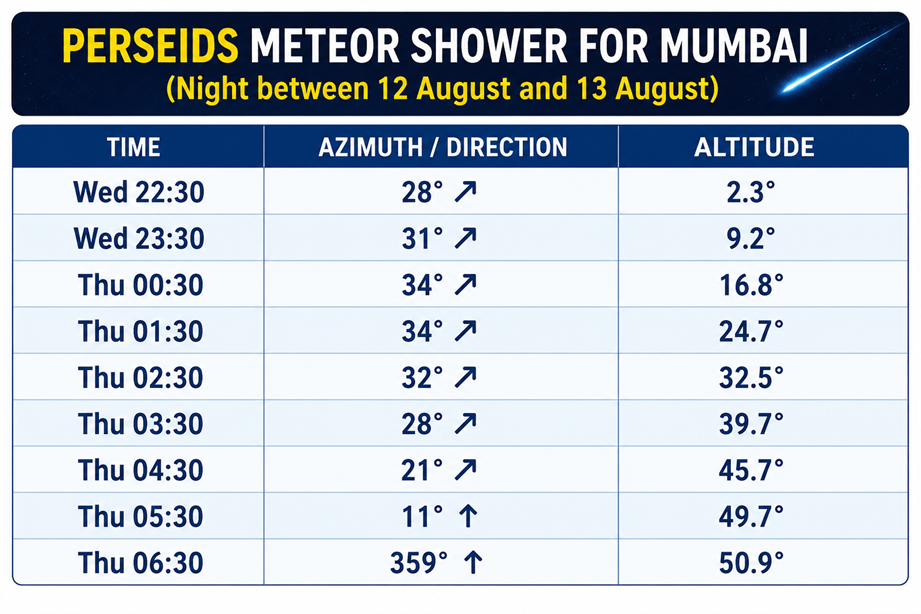 Skip the tools: A telescope or binoculars are not necessary to view the meteors, and can be more of a hindrance than a help, since these tools will limit the full view of the sky.
Now lie back, relax, and gaze slightly away from Perseus towards the sky above you (the zenith); this is where you will catch the most spectacular light streaks.
The best way to see the faint meteors is to give your eyes time to adjust to the dark conditions; this is called Dark Adaptation. Typically, the adaptation process lasts for 20-30 minutes, and even a quick glance at a bright smartphone screen can reset your adaptation clock.
Pro Tip: If you need to refer to a map or make changes to your gear… Use a dim red flashlight. Red light does not affect your eyes’ dark adaptation very much, so you can continue to enjoy that important sensitivity to see the faintest shooting stars.
5. Stargazing in the Himalayas with Perseids meteor shower 2026
5.1 Cloud Crisis of Mainland India.
If you are living in mainland India, catching sight of the Perseids could be a gamble. The rainy season is in July and August, when the entire sky is filled with clouds, leaving stargazers disappointed.
5.2 Spiti Valley and Leh-Ladakh AstroTours
To totally avoid the monsoon clouds, you will need to head north to the trans-Himalayan region. High-altitude cold deserts are an excellent way to do unobstructed stargazing.
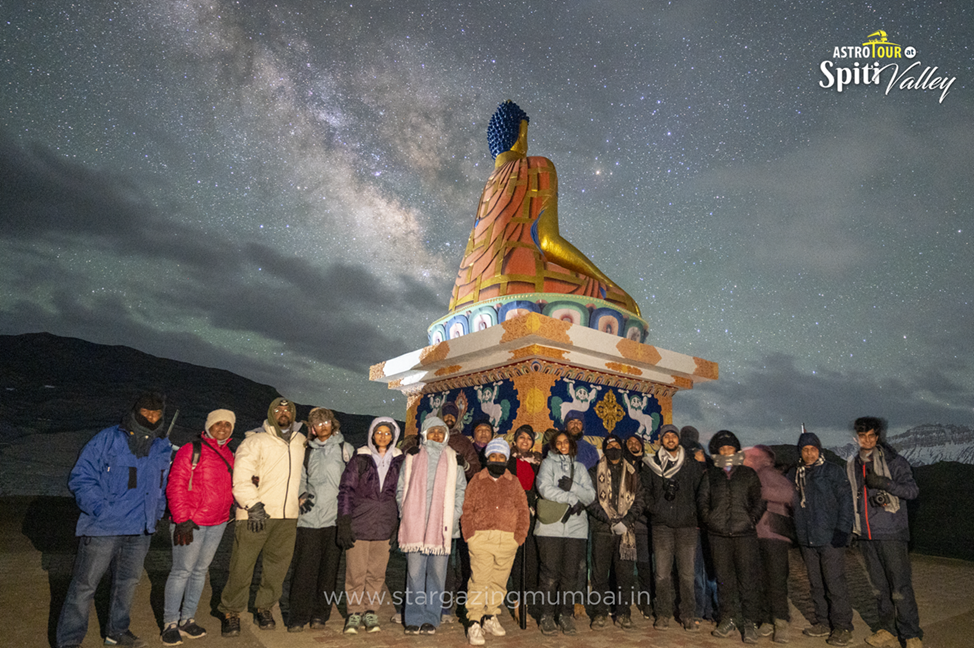 Spiti Valley and Leh-Ladakh are situated above 3000 meters above sea level. Heavy monsoon precipitation can not pass the giant Himalayan mountains, leaving these valleys dry and completely clear.
Bortle 1 Sky: A Spiti Valley stargazing advantage because of a perfect cosmic window to view the stars. The valleys are away from all the pollution of the city and of all the light and moisture. Because there is so little moisture and even less light pollution, the air is thin, leading to little to no distortion of the atmosphere. This means you will see the Milky Way and other celestial stars clearer than ever. There is also a very rare opportunity to see shooting stars during this time.
Don’t let the monsoon ruin your shooting star-gazing opportunity. Go check out our August batches for the Spiti Valley AstroTour and Stargazing Tour to Leh-Ladakh, for your opportunity to view the Perseids, along with the darkest and starriest skies of the subcontinent!


