
The month of August promises spectacular astronomical events that you all should not miss! Look out for the following events in the night sky; check out the links provided for live viewing of events not visible from your location.
Mercury at its greatest elongation on August 2:
This means that this is the best time to view it using telescopes and even through the naked eye in the morning sky in the western direction for the Southern Hemisphere.
Elongation refers to the distance between Mercury from Sun, which makes the planet more visible from Earth as it is not affected by the Sun’s glare. Since Mercury is a small planet, it is usually difficult to spot, but being elongated at 19 degrees helps its visibility. Catch up the first planet on the morning of August 2nd.
Moon near Saturn on August 3:
At the dawn of August 3rd, the Moon appears near Saturn and can be observed during the time before the sun rises from 3:30 AM to 5 AM. It will be visible to the naked eye to all the early risers. With a pair of binoculars or a small telescope, you can view the majestic rings of Saturn. Make sure you set up an alarm to catch up with Saturn.
Moon reaches perigee on August 10:
The moon will be at its closest distance to the Earth on August 10. This does not mean that it will appear huge, as this event does not coincide with a supermoon. However, this is an event of astronomical importance and can be ascertained using measurement devices. It affects the tides. There will be an increase in high tides and a decrease in low tides.
New Moon and Total Solar Eclipse coincide with the peak of the Perseids Meteor Shower on August 12-13:
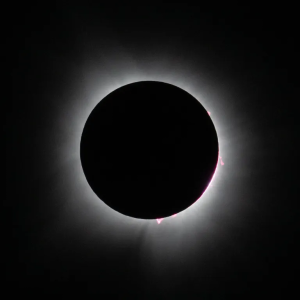
This is one of the most significant astronomical events in the year as it creates the perfect moment for the eyes of the sky gazers. The new moon is the ideal phase of the moon to observe the meteor shower without the bright light of the moon. It also happens to form a wonderful total solar eclipse, which will be visible from Russia, Greenland, and parts of Spain, and will not be visible in India due to the path of the Moon’s orbit. However, we can still enjoy better visibility of the beautiful, well-known meteors produced by the Perseids Meteor Shower due to the clear skies on the new moon day.
This means that this year, one of the brightest meteors will appear even brighter, a spectacle that must not be missed. So, get ready with your mats and energy drinks for a night under the heavenly beauty of the Perseids. Get away from the city lights and witness up to 50-100 meteors per hour during the peak.
For those interested in watching the live stream of the Total Solar Eclipse, you can use this link to access it for free: Total Solar Eclipse
Also, you can join Astro Tour @Spiti Valley with Stargazing Mumbai to witness the meteor shower at one of the darkest locations in India. Register yourself here NOW!! AstroTour at Spiti Valley
Venus at the greatest Eastern elongation, & Mercury-Jupiter conjunction on August 15:
India celebrates Independence with the bright view of Venus right after sunset in the western sky. The planet will be at its farthest distance from the Sun, making it appear brighter to us. The day is also marked by the Conjunction of the planets Mercury and Jupiter, which appear very close in the sky, with Mercury just 0.6 degrees north of Jupiter.
Enjoy the view right after sunset, making it one of the most awe-inspiring astronomical events in August.
Mercury’s superior conjunction with Earth and Sun on August 27:
Superior conjunction happens when the inner planet Mercury forms a straight line with Earth and Sun such that the small planet hides completely behind the Sun and becomes invisible, lost in the Sun’s glare.
Full Moon with a Partial Lunar Eclipse on August 28:
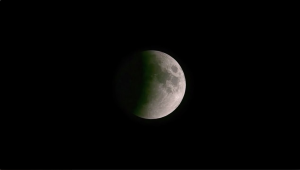
credits: NASA/JPL Education
The Sturgeon Full Moon of August is accompanied by a Partial Lunar Eclipse this year, making it one of the most mesmerising astronomical events to look forward. The Sturgeon Full Moon gets its name from the largest fishes in North America. The other names for this full moon are Lynx Full Moon and Corn Full Moon.
The Full Moon marks the start of harvesting season in the Northern Hemisphere. The coinciding Partial Lunar Eclipse will be seen in some regions of the Southern Hemisphere such as South America, Europe, and Africa. It occurs as the Earth comes between the Sun and the Moon when they are not fully aligned, thus creating a partial darkness to fall on the Moon. This event is not visible in India as it will be daytime when it occurs.
However, a live telecast can be seen using the following link: Lunar Eclipse
This month is full of amazing astronomical events aligning together; we have eclipses to meteors, conjunctions to elongations. What makes this more special is the fact that August marks the Harvest Season. Enjoy the skywatching to the fullest by referring to this article as many times as required. Happy skygazing, folks!


