
With February 2026 finally wrapped up with some exciting and beautiful celestial events, it’s time to proceed. March is the beginning of spring in the Northern Hemisphere and autumn in the Southern Hemisphere, a perfect month to catch the transition from winter to the summer night sky. From rare total eclipses and planetary conjunctions to the March equinox, Astronomical events in March 2026 will be a treat to watch for every skywatcher alike. March starts “galaxy season,” the best time through May for deep-sky viewing of galaxies. Optimal viewing occurs because the solar system’s position minimizes obstruction from the Milky Way’s dust and gas. The spring season in the Northern Hemisphere typically brings cooler, clearer air, which significantly enhances the viewing experience. This makes it an ideal time to use powerful telescopes to resolve the detailed structures, including spiral arms and elliptical shapes of these distant cosmic islands. Would you like to read more about it? Then let’s go!
March 3: Total Lunar Eclipse (The Blood Moon)
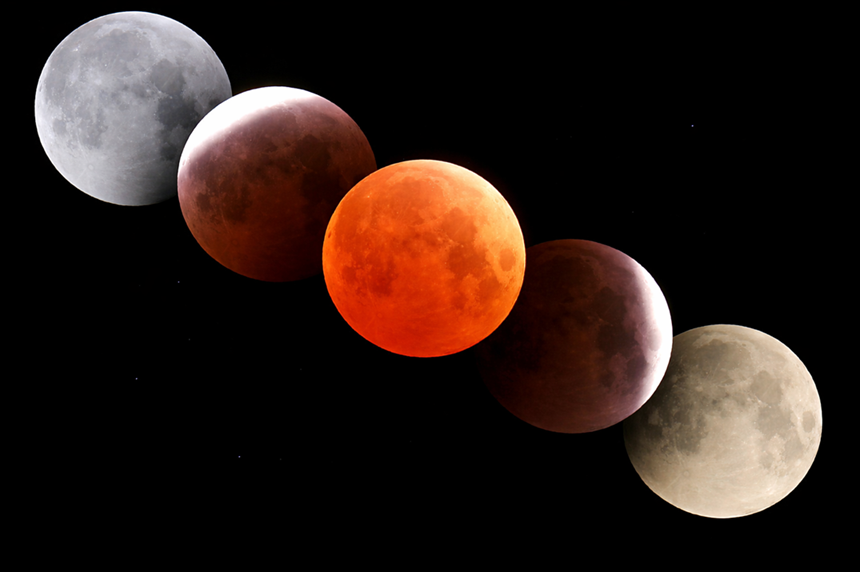 The March astronomical events 2026 kick off with a spectacular Total Lunar Eclipse on the evening of March 3. Get your cameras ready! On the evening of March 3, we are treated to a Total Lunar Eclipse. Instead of vanishing entirely, the Moon will be bathed in a coppery-red glow. This effect occurs because the Earth’s atmosphere bends sunlight and filters out blue light, effectively projecting a simultaneous display of all the world’s sunrises and sunsets onto the lunar surface. Keep in mind that this event precedes the important celestial marker of the March equinox.
Visibility: Who Can See It?
The eclipse is primarily a Pacific-centred event. Whether you see it in the “early hours” or evening depends on your longitude- Arkaroola, South Australia & New Zealand: One of the world’s best dark-sky sanctuaries; almost zero light pollution. The Moon will be well above the horizon during the deep red phase.
- The Pacific Islands (Mauna Kea, Hawaii): These central locations offer the best view of the “Blood Moon” due to high altitude and clear Pacific air.
- Japan & South Korea: Excellent evening views.
- Western North America (California, Alaska, BC): Prime pre-dawn viewing
Moonrise & Moonset
- India & Southeast Asia: We see a “Moonrise Totality.” The Moon will rise in the East already partially or fully eclipsed.
- Eastern USA & Canada: They see a “Moonset Totality.” The Moon will sink into the West while turning red, just as the sun begins to rise
- Western India (Mumbai, Delhi): The Moon rises just as the eclipse is ending (the penumbral phase), so you’ll see a subtle “shading” or a slightly dimmed full moon as it clears the horizon. Look toward the East between 5:45 PM and 6:30 PM local time as the Moon peaks above the horizon.
- For dramatic astrophotography in India, look for a spot with a clear eastern horizon. Since the Moon will be low, shooting it with a landmark or tree silhouette is better than a high-sky shot.
March 7: Venus and Neptune Conjunction
Shortly after sunset, the “Morning Star” Venus will appear incredibly close to the ice giant Neptune. While Venus is brilliant and easy to spot, Neptune is very faint. Viewing Tip: Use binoculars or a small telescope for enhanced viewing. You’ll see the dazzling white Venus right next to a tiny, pale blue “star” that’s Neptune!March 8: Venus & Saturn Conjunction
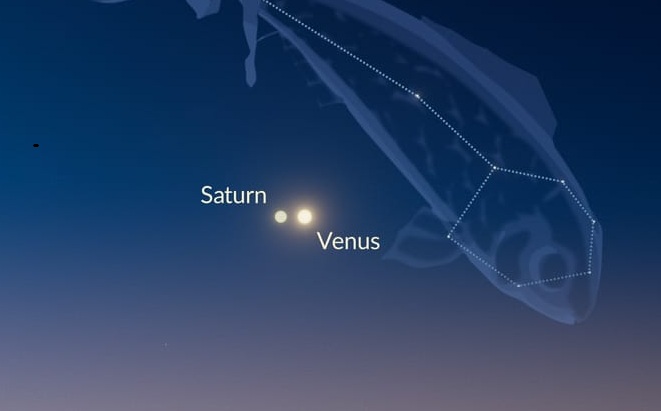 Shortly before sunrise, you might be able to spot Venus and Saturn in a close cosmic embrace. These two planets will be separated by 2 fingers’ width at arm’s length, making it one of the most beautiful Astronomical events in March 2026 to witness in the pre-dawn sky. Brilliant Venus will act as a guide to help you find the dimmer, golden-colored Saturn in the constellation Aquarius.
March 14: Mercury and Mars Conjunction
The 14% illuminated waning crescent moon will be nearby as Mercury and Mars meet in the morning sky. This conjunction sees the “Swift Planet” and the “Red Planet” appear extremely close in the sky, separated by a distance less than the width of your pinky at arm’s length. It is a great opportunity to spot Mercury, which is often lost in the Sun’s Brightness.March 17-18: Trio – Moon, Mars & Mercury
Over these two mornings, a thin waning crescent Moon will join the Mercury-Mars duo, creating a beautiful triangular formation in the sky. This is a perfect opportunity for astrophotography! Morning Triple performance of Moon, Mars, & Mercury.March 20: March Equinox
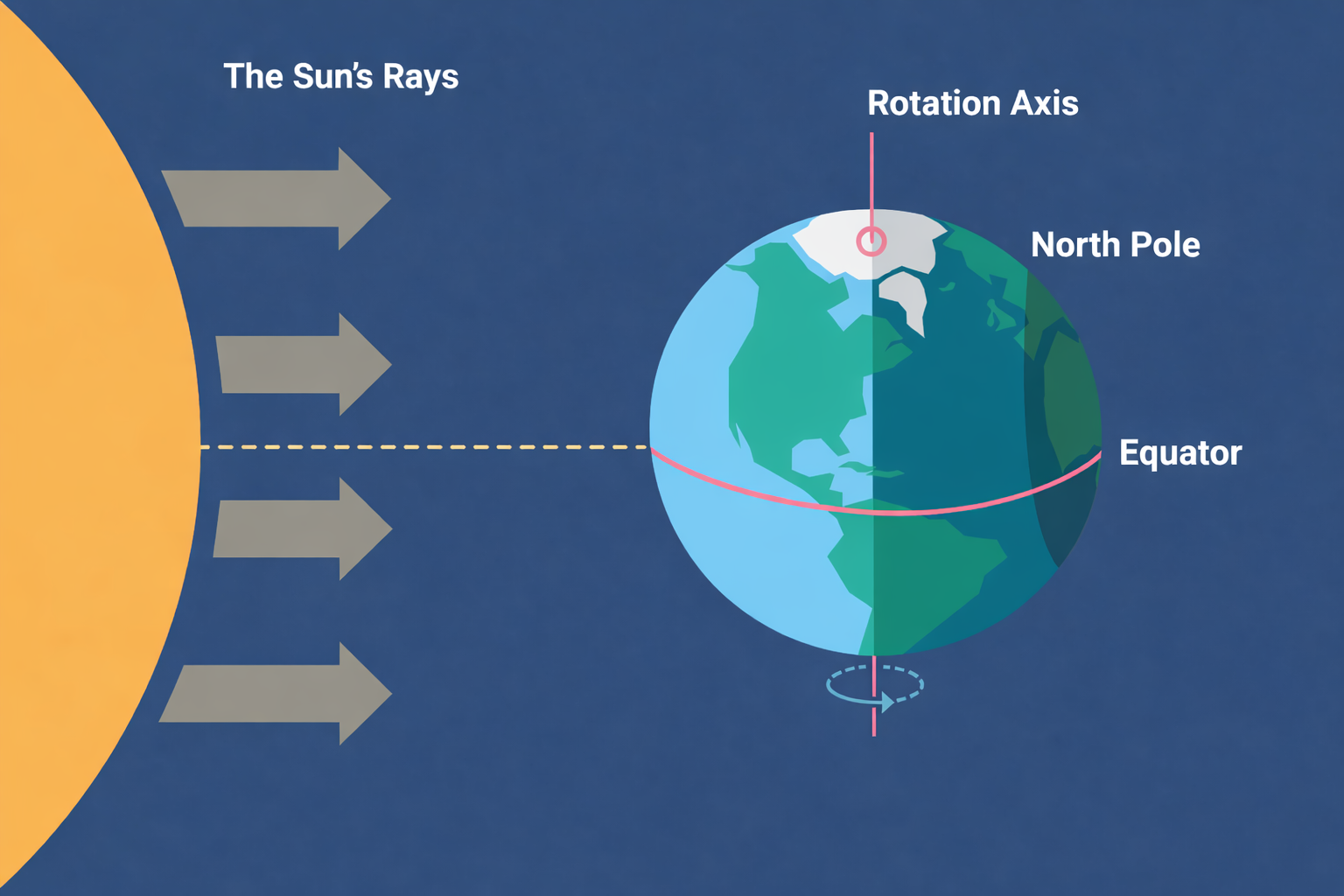 The vernal equinox marks the beginning of spring in the Northern Hemisphere and the first day of fall in the Southern Hemisphere on March 20, 2026. It’s a day when the Celestial Equator and the Ecliptic meet each other, creating equal amounts of daylight and night darkness, making it a significant milestone in the astronomical Calendar of Astronomical events in March 2026.
March 23: Moon and Pleiades
One of the most photogenic March 2026 astronomical events occurs when the waxing crescent Moon glides past the Pleiades star cluster (Messier 45).- The View: The cluster, also known as the “Seven Sisters,” will look like a tiny, sparkling dipper of blue stars resting right next to the Moon’s silver crescent in the Taurus constellation.
March 26: Moon near Jupiter
One of the most brilliant pairings of the month occurs on March 26. The 65% illuminated waxing gibbous moon will appear very close to the gas giant Jupiter.- The Duo: Jupiter is one of the brightest objects in the sky, so even next to a bright moon, the “King of Planets” will be unmistakable. They will be visible high in the night sky within the Gemini constellation.
- Viewing Tip: This conjunction is easily visible to the naked eye. If you use binoculars, you may be able to spot Jupiter’s four largest moons trailing in a line beside the planet.
March 28: Moon near the Beehive Cluster (M44)
On March 28, the 85% illuminated moon will pass near the Beehive Cluster, one of the nearest open star clusters to Earth.- The Event: Located in the constellation Cancer, the Beehive Cluster (Messier 44) looks like a fuzzy patch of light. On this night, the Moon will be just 1°25′ away, acting as a perfect guide to help you find it.
- Visibility: For observers in northern Europe and Iceland, a lunar occultation will occur, where the Moon actually passes in front of the cluster.
- Equipment: Because the Moon is quite bright, the cluster’s stars might be washed out. Binoculars are essential to see the “swarm” of stars surrounding the Moon.
March 29: Moon near Regulus (Lunar Occultation)
The final major event for the Astronomical events in March 2026 calendar happens on March 29, as the Moon meets Regulus, the brightest star in the Leo constellation.- The Occultation: In a spectacular finish to the month, the Moon will pass in front of Regulus. This lunar occultation will be visible across parts of Asia, Africa, Europe, and western Russia.
- The View: For those outside the occultation path, you will still see an incredibly close approach. Regulus, the “Heart of the Lion,” will appear to almost touch the edge of the bright lunar disk.


