September may have brought the arrival of autumn and longer nights, but October has plenty of reasons to keep looking up. This month’s astronomical events bring two meteor showers, a spectacular opportunity to observe Saturn, several close encounters between the Moon and planets, and the return of one of the most recognizable and childhood favourite constellations in the night sky, “the Orion“.
October’s astronomical events also offer one of the year’s best opportunities to observe Saturn. On October 4, the ringed planet reaches opposition, meaning Earth will pass between Saturn and the Sun. Saturn will be at its closest and brightest for the year and will remain visible throughout much of the night. A small telescope can reveal its famous rings and, under good conditions, some of its brighter moons.
The month also brings the Draconid and Orionid meteor showers. While the Draconids are usually a modest shower, October 2026 offers excellent conditions because their peak occurs close to the New Moon. Later in the month, the Orionids will streak across the sky as Earth passes through debris left behind by Halley’s Comet.
October is traditionally associated with the Hunter’s Moon, the name commonly given to the Full Moon following the Harvest Moon. In 2026, the Hunter’s Moon occurs on October 26. As the nights become longer, October provides increasingly comfortable opportunities for stargazing and astrophotography.
What’s special about October’s astronomical events?
October is an exciting month for skywatchers, with several major astronomical events taking place throughout the month. Saturn will reach opposition and shine at its brightest for the year, the Draconids will peak under nearly moonless skies, and the Orionids will return with fast meteors originating from debris left behind by Halley’s Comet.
The Moon will also pass close to Mars, Jupiter, Venus, Mercury, Saturn, and the Pleiades at different points during the month. Meanwhile, Mercury reaches its greatest eastern elongation, providing an opportunity to search for the elusive planet shortly after sunset.
October 4: Saturn at Opposition
October begins with one of the month’s biggest highlights. On October 4, Saturn reaches opposition, placing Earth directly between the Sun and itself.
At opposition, Saturn is on the opposite side of the sky from the Sun and is visible from around sunset, all night long until sunrise. It will appear brighter than at most other times of the year, making this opportunity an excellent time for observing the ringed planet.
Saturn will be visible in the eastern sky after sunset. Through a telescope, its distinctive rings and its brightest moon, “Titan”, are among the most rewarding sights to look out for.
Stargazing tip: Look for Saturn as a steady, yellowish point of light. Unlike stars, planets generally do not twinkle.

Credits: Wikipedia/Jcbeamin
October 5–6: Moon meets Mars and Jupiter
The first week of October’s astronomical events brings a series of close encounters between the Moon and bright planets.
On October 5, the waning crescent Moon will pass close to Mars, with the two appearing separated by roughly a degree in the sky. The pair will be visible in the pre-dawn sky. The Moon will then move toward Jupiter, passing close to the giant planet on October 6.
Jupiter is particularly easy to identify because of its brightness. Mars, meanwhile, has a distinctive reddish-orange appearance.
Bonus: The Moon will also pass near the Beehive Cluster around October 5, adding another interesting target for binoculars and telescopes.
October 8: Draconid Meteor Shower
The Draconid meteor shower reaches its peak on the night of October 8. Unlike many meteor showers that are best observed after midnight, the Draconids meteor shower is often best viewed during the evening.
The Draconids are produced when Earth passes through debris left behind by Comet 21P/Giacobini-Zinner. They are normally a modest meteor shower, but they can occasionally produce sudden bursts of activity.
The good news for skywatchers in 2026 is that the Draconids peak only a day or so before the New Moon on October 10. With very little moonlight interfering, the darker sky should provide favourable conditions for spotting the meteors.
How to watch: Find a dark location away from city lights and look toward the northern sky after nightfall. You do not need a telescope or binoculars—just your eyes, a comfortable place to lie down, and patience.
October 12: Mercury at Greatest Eastern Elongation
On October 12, Mercury reaches its greatest eastern elongation, appearing at its greatest angular distance from the Sun in the evening sky.
This is one of the better opportunities of the month to search for the small, elusive planet shortly after sunset. Mercury will remain relatively low above the western horizon, so an unobstructed view toward the west will be helpful.
Stargazing tip: Start looking shortly after sunset, but never use binoculars or a telescope while the Sun is above the horizon or anywhere near your field of view.
October 12–13: Moon meets Venus and Mercury
The Moon will make another series of close encounters in mid-October.
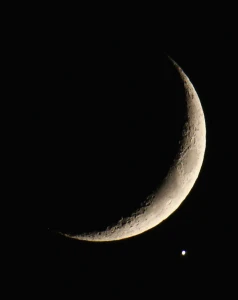
On October 12, the thin crescent Moon will pass close to Venus, followed by an encounter with Mercury around October 12–13. NASA’s sky calendar places the Moon-Venus conjunction on October 12 and the Moon-Mercury conjunction later that day.
These events will be challenging from some locations because Mercury and Venus are close to the Sun in the sky, but observers with a clear western horizon may be able to spot the pairing shortly after sunset.
October 21–22: Orionid Meteor Shower
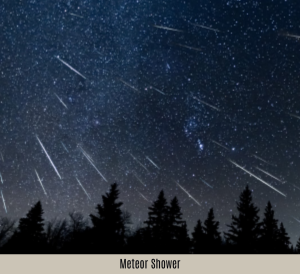
One of October’s most anticipated events is the Orionid meteor shower, which peaks around October 21–22.
The Orionids are created when Earth passes through the debris trail of Comet 1P/Halley. Tiny pieces of cometary material enter Earth’s atmosphere at around 66 kilometres per second, producing the fast streaks of light known as Orionid meteors.
Under ideal dark-sky conditions, the Orionids can produce around 10–20 meteors per hour at their peak.
The meteors appear to originate from the constellation Orion, but they can travel across a large portion of the sky.
However, viewing conditions in 2026 will not be perfect. The Moon will be a bright waxing gibbous during the peak, creating moonlight that can wash out some of the fainter meteors. Brighter Orionids will still be visible, particularly during the hours before dawn.
Best time to watch: After midnight and especially during the pre-dawn hours, when Orion is higher in the sky.
Bonus: You don’t need to look directly at Orion. Pick a dark area of sky away from the Moon and allow your eyes around 20–30 minutes to adjust to the darkness.
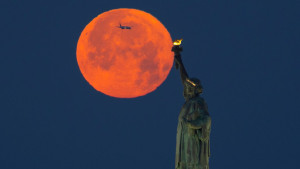
credits: CNN
October 26: Hunter’s Moon
October’s Full Moon occurs on October 26 and is traditionally known as the Hunter’s Moon.
The name follows the Harvest Moon and is associated with the time of year when fields had been harvested and hunters could use the extra light of the Full Moon to prepare for the coming winter. Other traditional names are also used by different cultures and communities.
The Full Moon will rise around sunset and remain visible throughout the night, making it an easy target for beginners and photographers.
Photography tip: The Moon can appear particularly dramatic when photographed near the horizon alongside buildings, mountains, trees, or other foreground objects. A telephoto lens can help capture details on the lunar surface.
October 28: Moon appears near Pleiades
Toward the end of October, the Moon will pass close to the Pleiades, also known as the Seven Sisters.
The encounter occurs on October 28, when the Moon will appear close to this famous open star cluster in the constellation Taurus.
The Pleiades are easily visible to the naked eye from a dark location and become an excellent binocular target. Through binoculars, many more stars within the cluster become visible.
Read more about the Pleiades, aka “the Seven Sisters”: The Curious Case of Pleiades
October 2026: Longer Nights and the Return of Orion
October is also an excellent month to start looking for some of the most recognizable constellations of the Northern Hemisphere.
As nights become longer, Orion begins appearing prominently in the eastern sky during the later part of the night. Its three-star belt makes it one of the easiest constellations for beginners to recognize.
For astrophotographers, October’s astronomical events provide opportunities to photograph Orion, the Pleiades, the Milky Way, planets, and meteor showers. Dark-sky locations away from city lights will provide significantly better views.
October 2026 promises to be an exciting month for skywatchers, with Saturn reaching opposition, two meteor showers crossing the night sky, and the Moon making close encounters with several planets and star clusters. From the Draconids under dark skies to the Orionids created by debris from Halley’s Comet, October offers plenty of reasons to spend a night beneath the stars. The Hunter’s Moon will brighten the end of the month, while longer autumn nights provide more time to explore the constellations. Whether you are an experienced astronomer, an astrophotographer, or simply someone curious about the night sky, October is a perfect month to step outside, look up, and discover what the universe has in store.